Accounting


Drills for the Topic...

Standard Costing

Print   Email  
Exams


NOTE: For multiple-choice and true/false questions, simply place your cursor over what you think is the correct answer. (There is no need to click the answer.) For fill-in-the-blank questions place your cursor over the _________.


If you have difficulty answering the following questions, learn more about this topic by reading our Standard Costing Explanation.


 1. The ingredients included in a manufactured food product are referred to as the _____________ materials.


 2. The wages of employees working on a manufacturer's assembly line are part of the product cost known as ______________ labor.


 3. A manufactured product has three inventoriable costs: direct materials, direct labor, and manufacturing or factory _____________________.


 4. The term associated with estimated, predetermined costs is __________________ costs.


 5. Manufacturers have the cost of their inventories in several general ledger accounts. One of the accounts is Stores. Which of the following inventories would be in the Stores account?
Materials              Work in Process              Finished Goods


 6. The supplies used in the manufacturing process would likely be
Administrative Expense              Direct Materials              Manufacturing Overhead


 7. The name given to the difference between the actual cost of a product's inputs and the standard cost of one of the product's inputs is known as a __________________.


 8. The standard cost of direct materials is the cost the manufacturer should have used to make the good output. True False


 9. The variance that indicates the difference between the amount of direct materials that should have been used to make the good output and the amount of direct materials actually used is the direct materials __________________________.


10. Which of the following terms would NOT be considered a price variance in a standard cost system?
Efficiency              Rate              Spending


11. Which of the following terms would NOT be considered a quantity variance associated with a product's inputs under a standard cost system?
Efficiency              Price              Usage


12. The most advantageous time to recognize a variance in the standard cost of a product's direct material is at the time the material is put into which of the following inventories.
Direct Materials              Work in Process              Finished Goods


13. If a company's amount of good output is less than the amount required to absorb its fixed manufacturing overhead costs, which variance will be unfavorable?
Budget              Efficiency              Volume


14. A company assigns its variable manufacturing overhead to its products on the basis of direct labor hours. The actual direct labor hours exceeded the standard direct labor hours for the products manufactured during the year. Which variable manufacturing overhead variance will disclose the amount of this unfavorable situation?
Efficiency              Spending


15. A company applies or assigns its variable manufacturing overhead costs on the basis of machine hours (MH). The variable manufacturing overhead spending variance is the difference between the actual variable manufacturing overhead costs incurred by the company and
   Actual MH X Actual variable manufacturing overhead rate
   Actual MH X Standard variable manufacturing overhead rate
   Standard MH X Standard variable manufacturing overhead rate


16. A company manufacturers a plastic tray. Its standard cost for the direct materials included in one tray is 2 pounds of material at the standard cost of $3 per pound. The company produced 100 trays and used 210 pounds of material. The material's actual cost was $3.10 per pound. The direct materials usage or quantity variance is
$21              $30              $31              $51


Use the following information in answering Questions 17 - 18:

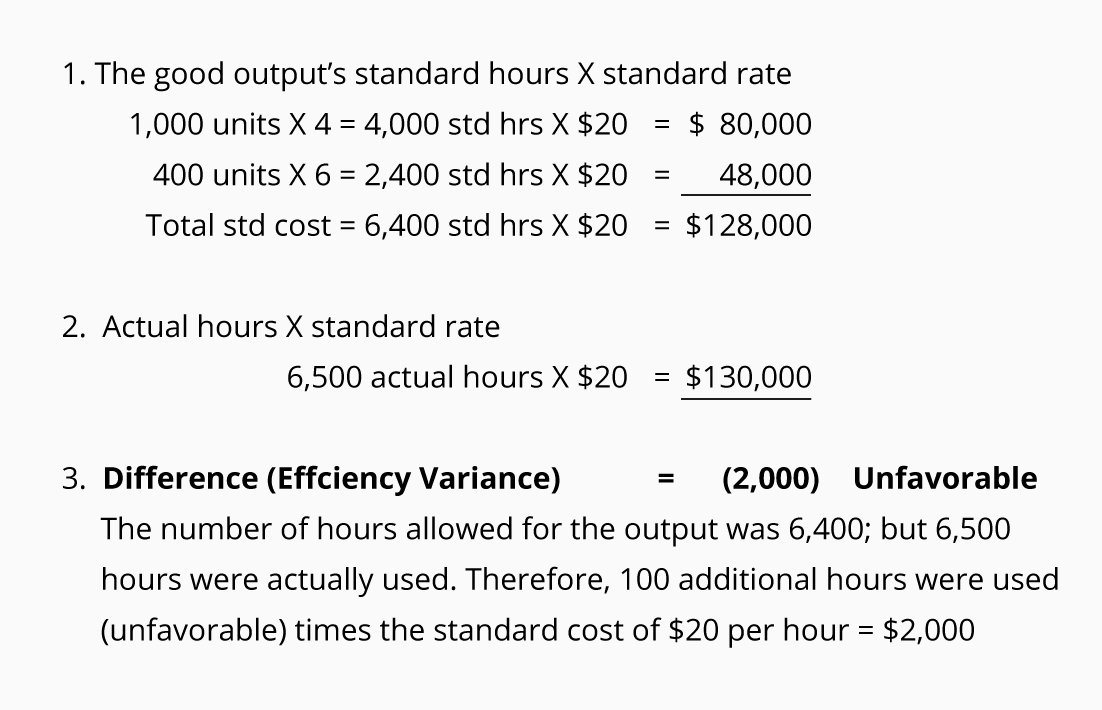
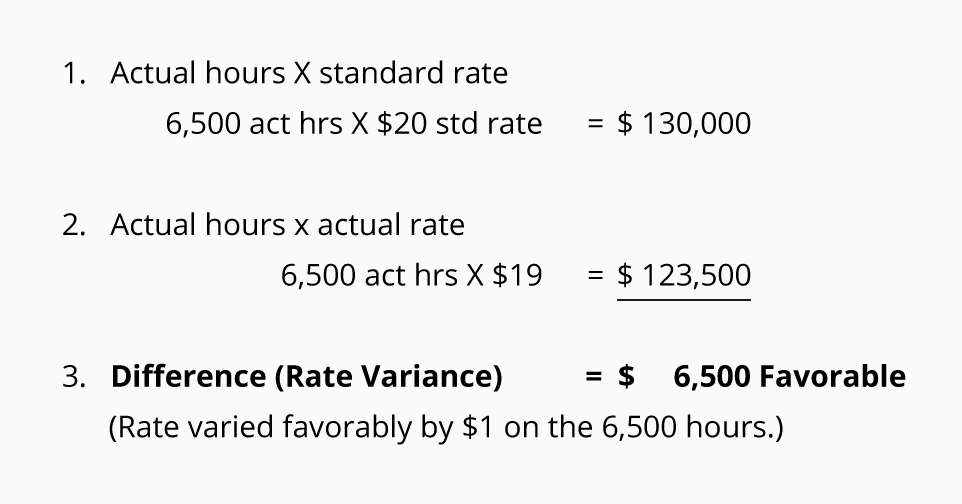
During a recent accounting period a company produced 1,000 units of Item Q and 400 units of Item R. The standard direct labor is 4 hours for each unit of Item Q and 6 hours for each unit of Item R. The standard cost for one hour of direct labor is $20 per hour. The actual direct labor for the accounting period was 6,500 hours at $19 per hour.

17. The direct labor efficiency variance for the accounting period was:
$1,900 Favorable              $1,900 Unfavorable
$2,000 Favorable              $2,000 Unfavorable


18. The direct labor rate variance for the accounting period was:
$6,400 Favorable              $6,400 Unfavorable
$6,500 Favorable              $6,500 Unfavorable


Use the following information in answering Questions 19-20:
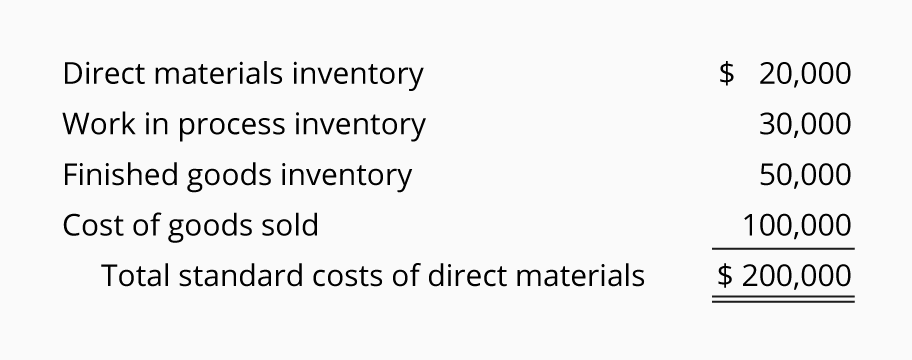
The direct materials price variance for the recent accounting period is $8,000 unfavorable. The direct material associated with this variance had a standard cost of $200,000. At the end of the accounting year, the standard cost of the direct material is residing in the following:

Direct materials inventory $ 20,000
Work in process inventory 30,000
Finished goods inventory 50,000
Cost of goods sold  100,000
    Total standard costs of direct materials $200,000


19. Assuming that the unfavorable variance of $8,000 is a significant (material) amount for this company, how much of the variance would be charged to the finished goods inventory?
$ 0              $800              $2,000              $4,000              $8,000


20. Assuming that the unfavorable variance of $8,000 is an insignificant (immaterial) amount for this company, what is the maximum amount of the variance that can be charged to the cost of goods sold?
$ 0              $800              $2,000              $4,000              $8,000


21. For additional drills on Standard Costing, see questions 29 - 50 on Exam Three.


More on AccountingCoach.com

Accounting Degree

16 Accounting Exams

Bookkeeping Test

Accounting Crosswords